2mm vs 4mm Gutter Guard Mesh: Which Do You Need?
If you’re comparing gutter guard, the first real decision isn’t the brand or the colour — it’s the mesh aperture. The 2mm vs 4mm gutter guard mesh question decides how much debris gets stopped, whether your home is protected against bushfire embers, and what you’ll pay per lineal metre. Get it wrong and you either overspend on protection you don’t need, or you fit a mesh that lets in the exact leaf litter you were trying to keep out. This guide walks through both in plain terms, with real Australian pricing and conditions, so you can pick the right one the first time.
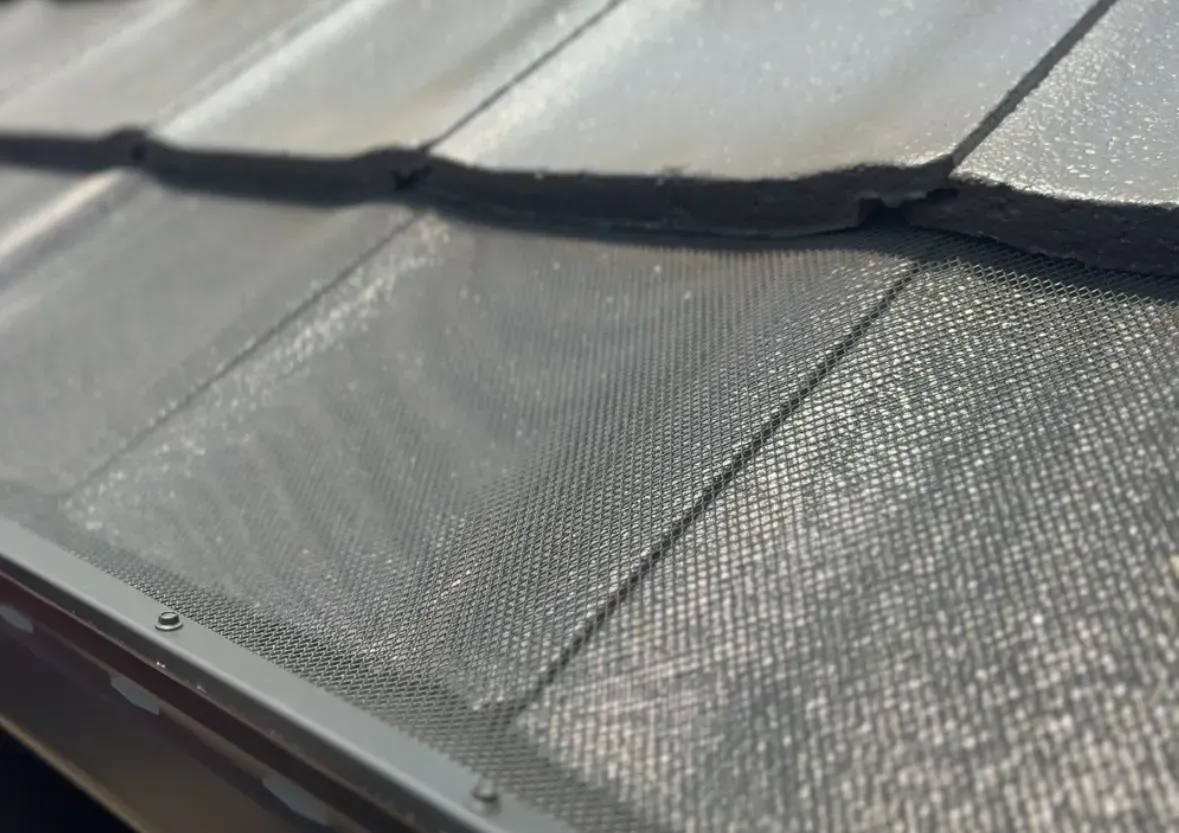
Both meshes we’re talking about here are powder-coated aluminium — not steel that rusts, and not plastic that goes brittle and cracks after a few summers of UV. The “2mm” and “4mm” refer to the size of the gaps (the aperture) in the mesh, not the thickness of the wire. That single measurement is what everything else hangs off.

The short answer
Here’s the quick version before we get into the detail:
-
4mm aluminium mesh — the all-rounder. Stops leaves, twigs, birds, possums and vermin. Best value per metre. Right for the majority of homes across Australia that aren’t in a designated bushfire zone.
-
2mm ember-rated mesh — the bushfire-grade option. Tighter aperture that blocks wind-driven embers, plus finer debris like gum nuts, seed pods and stringy bark. Required if you’re in a Bushfire Attack Level (BAL) rated area. Costs a little more per metre.
If you live in a bushfire-prone zone, the choice is effectively made for you — you need 2mm ember-rated mesh. If you don’t, 4mm is usually the smarter buy. The rest of this article explains why.
What the aperture size actually does
Gutter guard is a filter. The size of the holes sets what passes through and what stays out on top. Aussie trees — especially eucalypts and gums — are the problem this filter is built to solve, and they shed a surprising variety of material through the year.
4mm mesh: leaves, twigs and pests
A 4mm aperture comfortably stops the debris that clogs most gutters: broad leaves, gum leaves, twigs, larger seed pods, and the general junk that blows onto a roof. It also physically blocks pests. Birds can’t nest in your gutter, possums can’t get under the guard, and vermin lose an easy pathway into the roof cavity. For a typical suburban home with a few trees nearby, 4mm does everything you need it to do.
Fine material — dust, pollen, tiny seeds — will still wash through a 4mm mesh, and that’s by design. You want water to flow freely and fine grit to pass through and out the downpipe rather than building up as sludge on top of the mesh. A 4mm guard keeps the bulky, gutter-blocking debris out while letting water do its job.
2mm mesh: embers and fine debris
Drop to a 2mm aperture and the filter gets far finer. The headline reason is bushfire: Australian Standard AS 3959 (Construction of buildings in bushfire-prone areas) recognises non-combustible mesh with an aperture of no more than 2mm as a valid ember-protection measure. Wind-driven embers are what start most house fires in a bushfire — not the fire front itself — and a 2mm aluminium mesh across the gutter line stops those embers from settling in dry leaf litter against your roof.
As a side benefit, a 2mm mesh also catches finer debris that a 4mm would let through — think small gum nuts, stringybark strands and fine seed. On heavily treed blocks, some homeowners choose 2mm purely for that finer filtering, even outside a bushfire zone. The trade-off is that a tighter mesh needs to be pitched and installed properly so fine debris sheds off it rather than sitting on top.

Bushfire (BAL) ratings explained
If your property is in a bushfire-prone area, your council or a bushfire assessment will assign a Bushfire Attack Level, or BAL. It measures the level of exposure your home has to embers, radiant heat and direct flame. The levels run:
| BAL rating | Exposure | Gutter mesh |
|---|---|---|
| BAL-LOW | Very low risk | 4mm usually fine |
| BAL-12.5 | Ember attack | 2mm ember-rated |
| BAL-19 | Increasing ember + heat | 2mm ember-rated |
| BAL-29 | Higher heat + embers | 2mm ember-rated |
| BAL-40 / FZ | Direct flame contact | 2mm ember-rated (part of a wider system) |
The key takeaway: from BAL-12.5 upward, you need non-combustible ember-guard mesh with a maximum 2mm aperture, and it has to be aluminium or steel — not plastic or fibreglass, which melt. This is exactly why our 2mm mesh is powder-coated aluminium: it meets the ember-guard requirement and it won’t corrode along a coastal or high-humidity block.
If you’re building or renovating in a BAL area, your building surveyor will typically require the ember mesh as a condition of approval. Even if you’re not renovating, fitting 2mm mesh to an existing home in a fire-prone area is one of the cheapest, highest-impact preparations you can make before summer.
Cost: what you’ll actually pay
Both meshes are priced per lineal metre, fully supplied and installed. As a guide:
-
4mm aluminium mesh — from $44 per lineal metre installed.
-
2mm ember-rated mesh — from $46 per lineal metre installed.
The gap is smaller than most people expect — around $2 a metre. For a typical single-storey home, the whole job usually lands somewhere between $2,500 and $4,500 fully supplied and installed, depending on the length of your gutter line, roof access, and whether it’s single or double storey. Stepping up to 2mm across an average home might add only $60–$150 to the total, which is why we always say: if you’re anywhere near a bushfire zone, the ember-rated mesh is worth it for peace of mind alone.
Want a precise number for your place? We measure your roof from satellite imagery and give you a fixed price — no site visit, no waiting around, no sales pressure. Get a free satellite quote and we’ll tell you exactly what your gutter line costs in either mesh.
Colorbond vs tile roofs — does it change the answer?
Your roof type doesn’t change which aperture you need, but it does change how the mesh is fixed. On a Colorbond (metal) roof, the guard is typically fastened to the roof sheet and the front of the gutter, following the corrugation profile so water runs cleanly off the ribs and into the gutter. On a tile roof, we tuck the mesh under the first row of tiles and secure it to the gutter, so leaves shed off the guard rather than collecting at the tile line.
Either way, both 2mm and 4mm aluminium mesh work on both roof types. What matters more is the install quality: correct pitch so debris blows off, secure fixings that won’t lift in a storm, and a clean finish at valleys and hips. A cheap DIY mesh fitted badly will trap water and cause more problems than no guard at all — which is the difference between buying a product and having it professionally installed and guaranteed.
Which mesh should you choose?
Run through this quick check:
| Your situation | Best mesh |
|---|---|
| In a BAL-rated / bushfire-prone area | 2mm ember-rated |
| Building or renovating with a bushfire condition on approval | 2mm ember-rated |
| Heavily treed block, lots of fine gum debris, want maximum filtering | 2mm (optional upgrade) |
| Standard suburban home, leaves and pests the main concern | 4mm aluminium |
| Best value per metre, no bushfire exposure | 4mm aluminium |
For most homeowners outside a fire zone, 4mm is the sensible pick — it keeps the ladder in the shed and the gutters clear. For anyone in a bushfire-prone part of Victoria, NSW, SA or WA, 2mm ember-rated is the one to fit, and the small extra cost is easy to justify.
Not sure which zone you’re in or which mesh your council requires? That’s exactly the kind of thing we sort out during a quote. If you’re in Victoria, you can also read more about our gutter guard installation in Melbourne, where a lot of the outer-suburb and Dandenong Ranges blocks fall into BAL territory.
Why professional installation matters more than the mesh
Here’s the part the DIY sellers skip: the mesh is only as good as the install. We don’t just sell you a roll of aluminium and wish you luck on a ladder. Our installers fit the guard to your specific roof, pitch it correctly, seal the valleys, and guarantee the work. You never touch a ladder, and if anything isn’t right, we come back. That’s the real difference between buying gutter guard and having your gutters actually protected.
It’s also why the aperture question is only the start. Once you know whether you need 2mm or 4mm, the value is in getting it measured, priced and installed properly — first time.
For a broader look at how these guards perform over the year, have a read of our guide on whether gutter guards actually work in Australian conditions.
Get a fixed price for your home — no site visit needed
We measure your roof from satellite and send you a fixed quote for either 2mm or 4mm mesh. Free, fast, no pressure.
Prefer to chat? Call us on 0468 360 572.
Frequently asked questions
Is 2mm gutter guard mesh better than 4mm?
Not automatically — it depends on your home. 2mm is better if you’re in a bushfire-prone (BAL-rated) area, because its tighter aperture blocks wind-driven embers and meets ember-guard requirements. If you’re not in a fire zone, 4mm aluminium mesh gives better value and still stops leaves, twigs and pests. Tighter isn’t always the right choice; the correct choice is the one that matches your risk.
Do I legally need 2mm ember-rated mesh?
If your property has a Bushfire Attack Level of BAL-12.5 or higher, non-combustible mesh with a maximum 2mm aperture is generally required under Australian Standard AS 3959, and a building surveyor will often make it a condition of approval when building or renovating. Outside bushfire-prone areas there’s no such requirement, and 4mm is fine.
What’s the price difference between 2mm and 4mm mesh?
4mm aluminium mesh starts from around $44 per lineal metre installed, and 2mm ember-rated mesh from around $46 per lineal metre installed — roughly $2 a metre. On a typical single-storey home, upgrading to 2mm usually adds only $60–$150 to the total job, which lands between $2,500 and $4,500 supplied and installed.
Will 4mm mesh stop gum leaves and gum nuts?
4mm mesh easily stops gum leaves, twigs and larger seed pods, along with birds and vermin. Very small gum nuts and fine seed can sometimes pass through a 4mm aperture; if you have heavy eucalypt cover and want to catch that finer debris too, 2mm mesh filters it out. For most homes, 4mm handles the debris that actually clogs gutters.
Is the mesh aluminium or steel?
Both our 2mm and 4mm meshes are powder-coated aluminium. Aluminium won’t rust like steel and won’t go brittle and crack like plastic under Australian UV, which is why it lasts. The 2mm version is also non-combustible, so it qualifies as ember-guard protection in bushfire areas.
