Aluminium Gutter Guard vs Steel vs Plastic: Which One Actually Lasts Longest?
If you’re weighing up gutter guard for an Australian home, the material matters far more than the marketing. An aluminium gutter guard behaves very differently to a steel mesh or a cheap plastic screen once it’s been baking in the sun, filling with gum leaf and copping the odd Colorbond-melting heatwave for a decade. Pick the wrong one and you’re paying twice: once for the guard, and again to rip it out and start over.
We install gutter guard across Melbourne, Ballarat, Bendigo and Geelong every week, so we’ve seen what survives the Australian climate and what quietly fails after three summers. Here’s the honest comparison, with real numbers, so you can choose once and be done with it.

The Three Materials at a Glance
Almost every gutter guard sold in Australia is one of three things: powder-coated aluminium mesh, steel (galvanised or stainless) mesh, or moulded plastic/poly screening. They look similar in a showroom photo. They do not age similarly.
| Property | Aluminium | Steel | Plastic / Poly |
|---|---|---|---|
| Rusts? | No — won’t rust | Yes (galv), stainless resists but can tea-stain | No, but goes brittle |
| UV / heat resistance | Excellent | Good | Poor — cracks & sags |
| Bushfire / BAL rated | Yes (2mm ember mesh) | Some stainless products | No — combustible |
| Reacts with Colorbond? | No — compatible | Galv can cause dissimilar-metal staining | No |
| Typical lifespan | 15–20+ years | 10–15 years (galv less) | 3–7 years |
Plastic Gutter Guard: Cheap Today, Gone in a Few Summers
Plastic and poly screens are the ones you’ll find in a flat-pack at the hardware store, and they’re the reason a lot of homeowners think gutter guard “doesn’t work”. The problem is simple physics. Australian roofs get brutally hot — a dark Colorbond or tile roof can sit well above 60°C on a 40°C day, and the gutter line cooks with it. UV and that constant heat cycle make plastic go brittle. Once it’s brittle, it cracks, curls at the edges and sags into the gutter, and then it does the opposite of its job: it traps leaf instead of shedding it.
Plastic also fails the bushfire test outright. It’s combustible, so it offers no protection when embers land in a gutter full of dry gum leaf — arguably the single most important reason regional Victorian homeowners fit guard in the first place. If you live anywhere near bush in Ballarat, Bendigo or the Dandenongs, plastic isn’t a saving, it’s a liability.

Steel Gutter Guard: Strong, But It Has a Rust Problem
Steel mesh is a genuine step up from plastic. It’s rigid, it handles heat, and stainless-steel versions are used in high-BAL bushfire zones because steel doesn’t burn. So why don’t we default to it?
Two reasons: rust and metal reactions. Cheaper galvanised steel mesh will eventually rust, especially where the zinc coating gets scratched during install or nicked over time. In coastal and high-rainfall parts of Victoria that process speeds up. Rust stains bleed down fascias and Colorbond, and rusted mesh gets weak and flaky right where you can’t see it.
There’s also the dissimilar-metals issue. Put plain galvanised steel hard against an aluminium or Colorbond roof and you can set off galvanic corrosion — the two metals react, and you get staining and premature breakdown at the contact points. Good stainless steel avoids the rust problem but costs considerably more, and even stainless can “tea-stain” (surface discolour) in salty coastal air. Steel earns its place in extreme bushfire builds, but for the average Victorian home it’s usually more cost and hassle than it’s worth.
Aluminium Gutter Guard: Why It Wins for Most Australian Homes
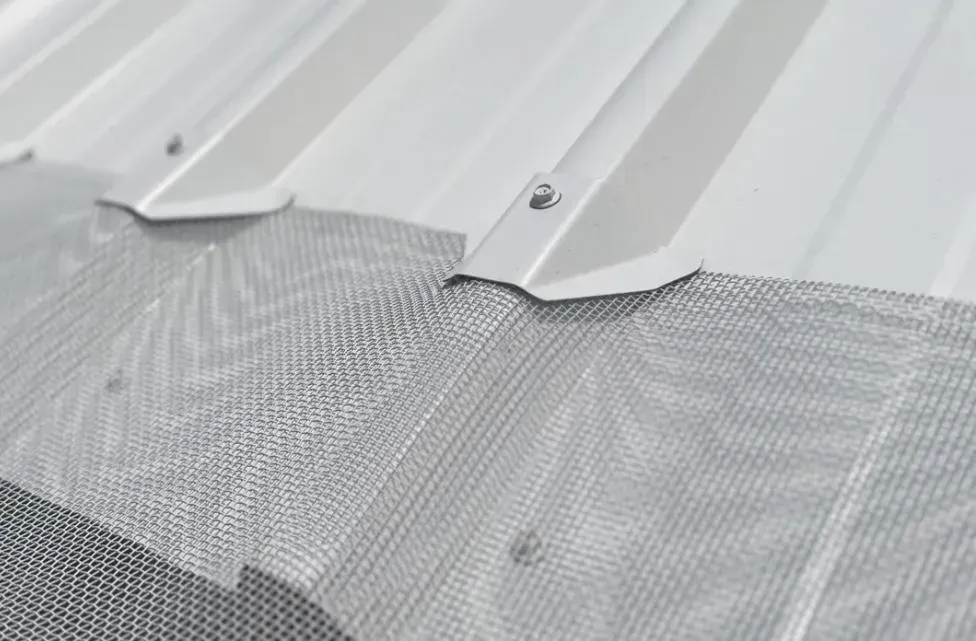
Powder-coated aluminium gutter guard is what we fit on the vast majority of homes, and it’s not brand loyalty — it’s that aluminium sidesteps every weakness the other two materials have.
-
It doesn’t rust. Aluminium forms its own protective oxide layer, so there’s no galvanised coating to fail and no rust streaks down your fascia. Ever.
-
It shrugs off UV and heat. Where plastic goes brittle, aluminium holds its shape through decades of Australian summers. It won’t sag into the gutter.
-
It’s compatible with Colorbond and aluminium fascias. No dissimilar-metal reaction, no staining at the contact line.
-
The powder-coat colour lasts and can be matched to your roof, so the guard basically disappears from the street.
-
It comes ember-rated. Our 2mm aluminium mesh is fine enough to block embers, which is the specification that matters in BAL-rated bushfire areas.
The upshot is lifespan. A quality powder-coated aluminium mesh, installed properly, is a 15–20+ year product. That’s the difference between a job you do once and a job you keep redoing. When you divide the price over the years you actually get out of it, aluminium is usually the cheapest option, not the dearest.
4mm vs 2mm Aluminium: Which Aperture Do You Need?
Once you’ve settled on aluminium, there’s one more choice — the size of the holes in the mesh. It’s not a gimmick; it changes what the guard can keep out.
4mm aluminium mesh — from $44 per lineal metre installed
This is the workhorse. The 4mm aperture is perfect for keeping out leaves, twigs, gum leaf, seed pods, tennis balls and nesting birds and rodents, while letting water through fast even in a downpour. For the average suburban Melbourne or Geelong home that isn’t in a designated bushfire zone, 4mm is the right call.
2mm ember-rated mesh — from $46 per lineal metre installed
The 2mm mesh does everything the 4mm does plus it’s fine enough to block wind-borne embers, which is what qualifies it for BAL (Bushfire Attack Level) rated properties. If your home is in or near bushland — think the Macedon Ranges, the outskirts of Ballarat and Bendigo, or the Dandenongs — this is the mesh that helps protect the most vulnerable part of your house during a fire: a gutter full of dry leaf litter.
The price gap between the two is small ($44 vs $46 per lineal metre), so for a couple of dollars a metre a lot of regional homeowners simply go with the ember-rated mesh for peace of mind. Not sure which BAL rating applies to your block? We’ll flag it as part of your free satellite quote.
What Does Aluminium Gutter Guard Actually Cost?
Here’s the part most websites dance around. Real figures for a fully supplied and installed job:
-
4mm aluminium mesh: from $44 per lineal metre, installed.
-
2mm ember-rated mesh: from $46 per lineal metre, installed.
-
Most single-storey homes: land between $2,500 and $4,500 fully supplied and installed.
-
Double-storey and long travel add cost (more access gear, more time on site).
Compare that to the “hidden” cost of the cheaper materials. A plastic screen you fit yourself might cost a few hundred dollars, but you’re up a ladder to do it, it fails in a handful of years, and you’re back where you started — plus the gutter clean-outs in between. Aluminium, installed by us with a workmanship guarantee, is one job you don’t revisit.
This is also where it pays to know exactly who you’re buying from. Some outfits online only sell you the mesh or “match” you to a random installer and then you’re on your own if something goes wrong. We’re the actual installers. We measure it, we fit it, we stand behind it, and you never touch a ladder. If you want the full rundown of how a professional fit-out works, see our gutter guard installation in Melbourne page, or if you’re regional, our Ballarat gutter guard installation service.
See Your Fixed Price Without Anyone Visiting
We measure your roof from satellite imagery and send back a fixed, no-surprises price — no salesperson at your door. Powder-coated aluminium, installed by us, guaranteed.
Prefer to talk it through? Call 0468 360 572.
Will Aluminium Gutter Guard Handle Gum Leaf?
This is the real Australian test. Eucalypts are the worst offenders for gutters — long, narrow gum leaves, stringy bark and hard seed pods that mat together and clog anything with gaps too wide. The 4mm aluminium aperture is specifically sized so gum leaf sits on top and blows or washes off rather than dropping through and building up underneath.
Now, the honest bit: no gutter guard means you never have to think about your gutters again. On a heavily treed block you may occasionally brush the odd build-up of leaf litter off the top of the mesh — but that’s a broom job from the ground, not you clearing sludge out of the gutter itself. The whole point is that you never climb a ladder to clean gutters again, and the water keeps flowing where it should. For homes under gums, that alone is worth the fit.
The Verdict
If you want the shortest-lasting, cheapest-today option, plastic will get you a few summers before it cracks — and it offers zero fire protection. Steel is strong and has a place in extreme bushfire builds, but galvanised versions rust and can react with your Colorbond. For nearly every home we quote across Victoria, powder-coated aluminium gutter guard is the one that lasts longest, looks best, resists fire when specced at 2mm, and works out cheapest per year in the ground.
Want to see the number for your specific roof? Grab a free satellite quote and we’ll tell you the exact mesh, the exact metres and the exact fixed price — no visit, no pressure. You might also like our guides on how much gutter guard really costs in Australia and choosing gutter guard for a BAL bushfire rating.
Frequently Asked Questions
Does aluminium gutter guard rust?
No. Aluminium doesn’t rust the way steel does — it forms a stable protective oxide layer instead of flaking away. That’s the main reason we fit powder-coated aluminium mesh on most Victorian homes: no rust streaks down the fascia and no galvanised coating to fail over time.
Is aluminium or steel gutter guard better for bushfire areas?
Both are non-combustible, but our 2mm ember-rated aluminium mesh is fine enough to block wind-borne embers and is compatible with Colorbond and aluminium fascias without the rust or dissimilar-metal reactions you can get with galvanised steel. For most BAL-rated homes in regional Victoria, 2mm aluminium is the practical choice.
How long does aluminium gutter guard last?
A quality powder-coated aluminium mesh, professionally installed, typically lasts 15 to 20 years or more. That’s roughly triple the lifespan of plastic screening, which tends to go brittle and crack within 3 to 7 Australian summers.
How much does aluminium gutter guard cost installed?
Our 4mm aluminium mesh starts from $44 per lineal metre installed, and the 2mm ember-rated mesh from $46 per lineal metre. Most single-storey homes come in between $2,500 and $4,500 fully supplied and installed, with double-storey and long travel adding some cost.
Do I still have to clean my gutters if I get gutter guard?
You’ll never climb a ladder to clean out the gutter itself again — that’s the whole point. On heavily treed blocks you might occasionally brush leaf litter off the top of the mesh from the ground, but the water keeps flowing and the sludge no longer builds up inside the gutter.
