How Long Does Gutter Guard Last? Aluminium vs Steel vs Plastic
How long does gutter guard last? A good quality powder-coated aluminium mesh, properly installed, will last 20 years or more — often the practical life of your roof. Cheap steel mesh can rust out in 5 to 10 years, and thin plastic guard often goes brittle and cracks within 3 to 8 years under the Australian sun. So the honest answer is: it depends entirely on what the guard is made of, how it’s installed, and where you live. The gap between the best and the worst material is not small — it’s the difference between fitting it once and fitting it three times.
At Titan Gutter Guards we install across Australia every week, and we see the failures firsthand — the corroded steel, the sun-cooked plastic, the sagging mesh that let the leaves straight through. This guide walks through the real lifespan of each material, the exact things that shorten it, and how to make your gutter guard last as long as possible.

Gutter guard lifespan by material
Not all gutter guard is the same product with a different sticker. The base material decides almost everything about how long it survives on your roof. Here’s the realistic range we see in the field across Australian conditions.
| Material | Typical lifespan | Main failure mode |
|---|---|---|
| Powder-coated aluminium mesh | 20+ years | Rarely fails; coating slowly fades cosmetically |
| Steel / galvanised mesh | 5–10 years | Rust, especially at cut edges and screw points |
| Plastic / PVC mesh | 3–8 years | UV brittleness, cracking, sagging |
| Foam gutter inserts | 2–5 years | Breaks down, holds moisture, grows debris |
| Brush (“gutter broom”) guard | 3–6 years | Traps debris in bristles, rusts, clogs |
Why aluminium mesh lasts the longest
Aluminium is the standout for one simple reason: it does not rust. Steel and iron rust because iron reacts with oxygen and moisture. Aluminium reacts differently — it forms a thin, stable oxide layer on the surface that actually protects the metal underneath. That’s why aluminium is used on boats, aircraft and window frames that sit in the weather for decades.
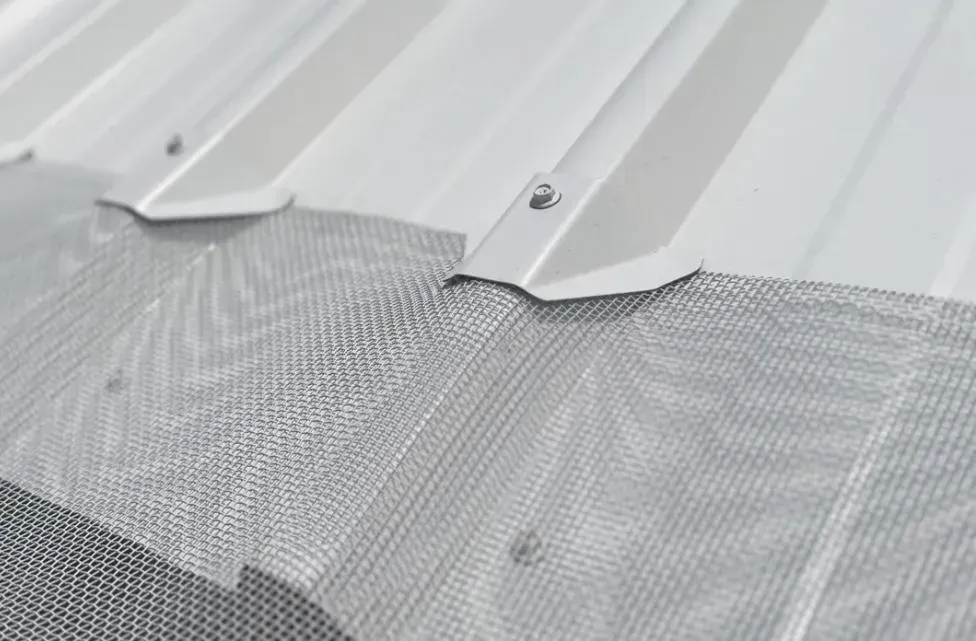
The quality aluminium mesh we install is also powder-coated. That baked-on coating does two jobs: it gives the guard its colour so it disappears against your roof, and it adds a UV-stable outer skin that shrugs off the harsh Australian sun. Even when that coating eventually fades after many years, the aluminium underneath keeps doing its job. Compare that to a plastic guard where the material is the plastic — once UV attacks it, there’s nothing left protecting anything.
This matters a lot in Australia specifically. Our UV index runs higher than most of the world, our summers are brutal, and a huge slice of the country carries a bushfire risk rating. Aluminium mesh handles all three. That’s exactly why it’s become the standard material for serious, long-term gutter protection here rather than the cheap imported alternatives.
Why steel mesh rusts out early
Steel or galvanised steel mesh looks tough on day one, and it’s cheap, which is why you’ll find it on hardware shelves. The problem shows up a few winters later. Galvanising is a thin zinc coating over steel — the moment that coating is scratched, cut, or worn through, the bare steel underneath starts to rust.
And here’s the catch: every gutter guard has to be cut to fit and screwed down. Every cut edge and every screw hole is a spot where the protective coating is broken. That’s exactly where you’ll see the orange staining start. Once rust takes hold in a gutter — which is a damp, leaf-filled, salt-and-pollution-collecting environment — it spreads. Coastal homes see it fastest because of salt in the air. Within 5 to 10 years, a rusted steel guard isn’t just ugly, it’s structurally failing and staining the fascia and roof below it.

Why plastic guard fails fastest
Plastic and PVC gutter guard is the cheapest option and, unsurprisingly, the shortest-lived. The enemy here is UV radiation. Sunlight breaks down the polymer chains in plastic over time — it loses flexibility, goes chalky, then brittle, then it cracks. You’ve seen the same thing happen to an old outdoor chair or a garden hose left in the sun.
On a roof, plastic guard is sitting in the single most UV-exposed spot on your property, all day, every day, for years. Under a Colorbond roof in an Australian summer, surface temperatures can climb well past 60°C, which accelerates the breakdown further. Once the plastic goes brittle it starts to sag between fixings, crack under the weight of debris, and pop out of the gutter. Some plastic guards fail in as little as 3 years. Even “UV-stabilised” plastic is still, fundamentally, plastic in the sun.
What shortens gutter guard lifespan
Even the best aluminium mesh can be let down by the wrong conditions or a poor install. These are the real factors that decide whether your guard reaches its full lifespan.
-
Rust-prone materials — steel in a wet, leafy gutter is a losing battle from day one.
-
UV exposure — the biggest killer of plastic; largely irrelevant to properly coated aluminium.
-
Heavy gum and eucalyptus leaf load — Australian natives drop fine leaf, twigs, bark ribbons and gumnuts year-round, not just in autumn. A guard that sags or has a coarse mesh lets this fine debris straight through.
-
Salt air — coastal properties corrode metals faster; another reason aluminium wins near the beach.
-
Poor installation — gaps, wrong fixings, incorrect mesh angle, or steel screws in an aluminium mesh (which causes galvanic corrosion). The material can be perfect and still fail if it’s fitted badly.
-
Wrong mesh size — a mesh too coarse for your debris type, or too fine for your rainfall, causes overflow and standing water that shortens the life of everything.
-
Thermal movement — cheap materials that expand and contract heavily in our temperature swings loosen at the fixings over time.
Notice how many of these come back to installation quality, not just material. This is the part DIY gets wrong most often. A guard is only as good as the way it’s fitted to your specific roof profile, and getting the mesh selection, angle and fixings right is the difference between 5 years and 20. It’s also the reason we install every job ourselves and guarantee the workmanship — you’re not buying a roll of mesh, you’re buying a finished result that lasts.
Aluminium mesh options: 4mm vs 2mm ember-rated
Both mesh sizes we fit are powder-coated aluminium, so both share that 20-year-plus lifespan. The difference is the aperture — the size of the holes — which you match to your situation.
-
4mm aluminium mesh — from $44 per lineal metre installed. The everyday workhorse. Keeps out leaves, twigs, birds and vermin while letting rain through freely. Ideal for most suburban homes.
-
2mm ember-rated aluminium mesh — from $46 per lineal metre installed. A finer aperture that blocks fine debris and meets bushfire (BAL) requirements by stopping burning embers entering the roof cavity and gutters. Essential if you’re in a designated bushfire-prone area.
If you live anywhere with a BAL rating — and a large part of regional and outer-suburban Australia does — the 2mm ember-rated mesh isn’t just about longevity, it’s about protecting the home during a fire event. Aluminium is non-combustible, which is exactly why it’s the approved material for this purpose. Most single-storey homes come in between $2,500 and $4,500 fully supplied and installed, and that’s a one-time spend when the material lasts two decades.
How to make your gutter guard last as long as possible
Once quality aluminium mesh is professionally installed, it’s genuinely low-maintenance — you’ll never climb a ladder to scoop out gutters again. But “low maintenance” isn’t “zero maintenance,” and a few simple habits get you the full lifespan:
-
Start with aluminium. The single biggest decision. Steel and plastic are cheaper up front and cost you more when you replace them.
-
Get it professionally installed. Correct mesh, correct angle, correct aluminium-compatible fixings, no gaps. This is where lifespan is won or lost.
-
Match the mesh to your debris. Heavy gum leaf and fine seed needs a suitable aperture and a properly pitched guard so debris blows or washes off rather than sitting on top.
-
Hose the surface occasionally. After heavy leaf drop, a quick hose-down from the ground (or an occasional soft brush if you can safely reach) clears any debris resting on top so water keeps flowing freely.
-
Check after major storms. A quick visual glance up after wild weather catches any dislodged section early, before it becomes a problem.
Do that, and there’s no reason a quality aluminium guard won’t outlast almost every other component on your roof. For more on keeping the system flowing, see our guide on whether gutter guards still need cleaning.
Live in Victoria? We install across the state — see our gutter guard installation in Melbourne page for local details, or get a fixed price for your exact roof below.
The real cost comparison over 20 years
Cheap guard looks cheap until you count the replacements. If a plastic or steel guard lasts 5 to 8 years, you’re paying to have it removed and refitted two or three times over the same period one aluminium install would cover. Add the labour each time, the mess of rust stains on your fascia, and the risk of blocked gutters causing water damage in between — and the “cheaper” option ends up being far more expensive. Buy once, buy aluminium, done.
Want a fixed price for your roof — no site visit needed?
We measure your roof from satellite and send you a fixed, no-obligation quote. No sales rep on your doorstep, no ladder, no guesswork.
Or call us direct on 0468 360 572
Frequently asked questions
How long does aluminium gutter guard last?
Good quality powder-coated aluminium gutter guard lasts 20 years or more when it’s professionally installed. Aluminium doesn’t rust and the baked-on powder coating resists UV, so it typically lasts the practical life of your roof.
Does gutter guard have a warranty?
Quality aluminium gutter guard usually carries a long material warranty, and a reputable installer will guarantee their workmanship on top of that. Because we install every job ourselves, we stand behind both the material and the fitting.
Why does steel gutter guard rust so quickly?
Steel rusts because iron reacts with moisture and oxygen. Even galvanised steel has only a thin zinc coating, and every cut edge and screw hole breaks that coating and exposes bare steel. In a damp, leaf-filled gutter — especially near the coast — that’s where rust starts and spreads, often within 5 to 10 years.
Will UV wreck my gutter guard?
UV is the main killer of plastic gutter guard — Australia’s harsh sun makes it go brittle and crack, sometimes within 3 years. Powder-coated aluminium is UV-stable; the coating may slowly fade cosmetically over many years, but the aluminium underneath keeps working.
Is gutter guard worth the cost if I’ll replace my roof one day?
Yes. Quality aluminium guard lasts 20-plus years, so it comfortably covers the life of most roofs. It saves you the cost and risk of regular gutter cleaning, protects against blockages and water damage, and — with 2mm ember-rated mesh — adds bushfire protection. It’s a one-time spend that pays for itself.
