Types of Gutter Guard Compared: Mesh vs Brush vs Foam
If you’re weighing up the different types of gutter guard for an Australian home, the choice matters more than most product pages let on. Get it right and you’ll stop climbing a ladder to scoop out gum leaves, keep embers out during a bushfire, and protect a roof that costs tens of thousands to replace. Get it wrong and you’ll be pulling out a clogged, rotting mess in two years — and paying to do the whole job again.
Not all gutter guard is the same product. The term covers everything from a $12 roll of foam from the hardware store to a fully installed, powder-coated aluminium mesh system that outlives your roof. Below we compare the four main types you’ll actually come across in Australia — aluminium mesh, brush, foam, and plastic clip-in guards — on pros, cons, lifespan, cost, and how each one copes with our specific conditions: eucalyptus leaf, harsh UV, torrential summer downpours, and bushfire.

The four main types of gutter guard
1. Aluminium mesh gutter guard
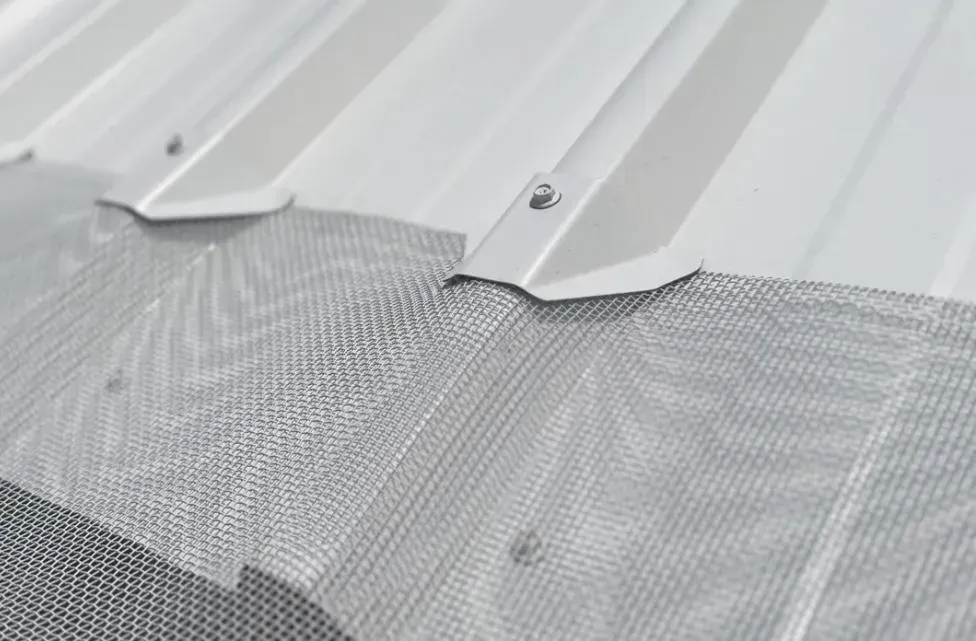
This is a rigid or semi-rigid perforated sheet of aluminium — usually powder-coated to match your roof — that’s screwed down over the gutter and up under the first row of tiles or Colorbond sheets. The mesh sits on a slight angle so leaves blow or wash off while water passes straight through the holes.
Aperture (hole) size is where it gets serious. A 4mm aperture aluminium mesh handles general leaf litter, pine needles and debris. A 2mm ember-rated mesh meets the fine tolerances required for bushfire-prone (BAL-rated) areas, blocking embers as well as leaf.
-
Pros: Longest lifespan of any guard, won’t rust like steel or go brittle like plastic, ember/BAL rated in 2mm, fully seals the gutter, adds a finished look to the roofline.
-
Cons: Higher upfront cost, and it needs to be installed properly — this is not a DIY-in-an-afternoon product if you want it to last.
-
Lifespan: 20+ years. Powder-coated aluminium simply doesn’t degrade the way cheaper materials do.
2. Brush gutter guard
Brush guard looks like a giant bottle brush — a wire spine with bristles radiating out — that you drop into the gutter channel. The idea is that leaves sit on top of the bristles while water flows through underneath.
-
Pros: Cheap, no tools, drops straight in. Fine as a very short-term stopgap.
-
Cons: This is the big one for Australia — fine gum leaf, seed pods and grit get trapped inside the bristles rather than shedding off. Within a season or two the brush becomes a compost-filled sponge that holds moisture against your gutter, actually accelerating rust. It does nothing for embers.
-
Lifespan: 1–3 years before it’s clogged and needs pulling out and cleaning — which defeats the purpose.
3. Foam gutter guard
Foam guard is a triangular wedge of open-cell foam you push down into the gutter. Water is supposed to soak through the foam while debris stays on top.
-
Pros: The cheapest option and the easiest to fit — no fixings at all.
-
Cons: Australian UV destroys foam. Sitting exposed at the top of the gutter, it goes brittle and crumbly, often within 12–24 months. It holds water and organic matter, which encourages mould, mosquito breeding and rust. Seeds happily germinate in it. And like brush, it offers zero ember protection.
-
Lifespan: 1–2 years, often less in full sun.
4. Plastic clip-in gutter guard
Plastic (PVC or polypropylene) guards clip or slot over the gutter lip. They’re the DIY hardware-store panels most people picture — usually sold in flat packs for you to install yourself.
-
Pros: Lower material cost than aluminium, lightweight, and you can buy it off the shelf.
-
Cons: Plastic and Australian sun are a bad match. UV makes it brittle, so it cracks, warps and lifts — and once a panel lifts, leaves get underneath and you’re worse off than with no guard at all. Most plastic guards aren’t ember rated, and warping around the fixings creates gaps embers can enter. It’s a DIY product, so there’s no installer standing behind the work.
-
Lifespan: 3–7 years depending on sun exposure, but performance drops off well before it fully fails.

Quick comparison table
| Type | Typical lifespan | Ember / BAL rated? | Handles fine gum leaf? | Relative cost |
|---|---|---|---|---|
| Aluminium mesh | 20+ years | Yes (2mm) | Yes | Higher upfront, lowest long-term |
| Brush | 1–3 years | No | No — traps it | Low |
| Foam | 1–2 years | No | No — holds it | Lowest |
| Plastic clip-in | 3–7 years | Usually no | Partly, until it warps | Low–medium |
Why quality aluminium mesh wins in Australian conditions
Australia throws a specific combination of problems at your gutters, and it’s exactly the combination that finishes off the cheaper guard types.
Eucalyptus and gum leaf
Gum leaves are thin, waxy and curved — they don’t sit flat and they don’t rot away quickly. Fine leaf and seed pods slip into brush bristles and foam pores and stay there. On a correctly angled aluminium mesh, that same debris dries out on top and blows or washes off with the next decent wind or downpour. The gutter underneath stays clear.
Brutal UV
Our sun is the reason foam and plastic have such short lives here. UV breaks down polymers — they go brittle, crack and crumble. Powder-coated aluminium is immune to that process. It’s the same reason your roof is metal or tile, not plastic.
Bushfire and BAL ratings
If you’re in a bushfire-prone area, ember attack — not the fire front — is what ignites most homes. Embers land in gutters full of dry leaf and start a fire right at your roofline. A 2mm ember-rated aluminium mesh does two jobs at once: it keeps the gutter clear of the fuel, and its fine aperture blocks the embers themselves. Foam, brush and most plastic guards offer no meaningful ember protection, and in the case of foam you’re literally bolting flammable material to your roof. For more on matching mesh to your bushfire rating, see our guide on gutter guard and BAL bushfire ratings.
Colorbond vs tile roofs
Good aluminium mesh installs cleanly on both. On a Colorbond (metal) roof the mesh is fixed and run up under the sheeting; on a tile roof it’s set to follow the tile profile so there are no gaps for leaf or embers to sneak under. Powder-coated finishes can be matched to your roof colour so the whole thing looks like it belongs there — a world away from a strip of black foam poking out of the gutter.
What gutter guard actually costs in Australia
Cheap guards feel like a bargain until you count how often you replace them. Foam or brush at a few dollars a metre sounds great, but if you’re pulling it out and redoing it every couple of years — plus still cleaning the gutter — you spend more over a decade than you would have on a permanent solution, and you’ve been up the ladder the whole time.
Professionally installed aluminium mesh is priced per lineal metre, fully supplied and installed:
-
4mm aluminium mesh — from $44 per lineal metre installed
-
2mm ember-rated mesh — from $46 per lineal metre installed
For most single-storey homes that works out to roughly $2,500–$4,500 fully supplied and installed, depending on the length of guttering, roof type and access. That’s a one-time cost for something that lasts 20+ years — and it’s installed by a real crew who guarantee the work, so you’re not up a ladder and you’re not liable if something goes wrong. If you’d like the exact figure for your place, we can measure your roof from satellite and send a fixed-price free satellite quote without anyone visiting.
The catch with cheap DIY guards
The real difference isn’t just the material — it’s who stands behind the job. Foam, brush and clip-in plastic are sold as DIY products. You buy the box, you fit it, and if it warps, clogs or lets leaves through, that’s on you. There’s no one guaranteeing it seals properly or holds up.
When we install aluminium mesh, we actually do the installation — real installers, fixed correctly to your specific roof, with the work guaranteed. You never touch a ladder, and you never have to wonder whether it was fitted right. That’s the part a hardware-store flat pack can’t give you.
Ready to sort your gutters for good?
Get a fixed-price quote measured from satellite — no site visit, no pressure. We install ember-rated aluminium mesh right across Australia, including gutter guard installation in Melbourne.
Or call us on 0468 360 572
Frequently asked questions
What is the best type of gutter guard for Australian homes?
Powder-coated aluminium mesh is the best type of gutter guard for Australian conditions. It handles fine eucalyptus leaf, doesn’t degrade in harsh UV like foam or plastic, and in a 2mm ember-rated aperture it protects against bushfire embers. It also lasts 20+ years, so it’s the cheapest option over the life of your roof despite a higher upfront cost.
Is foam or brush gutter guard any good?
Foam and brush are the cheapest to buy but the weakest performers here. Both trap fine gum leaf rather than shedding it, hold moisture against the gutter (which speeds up rust), and offer no ember protection. Australian UV also breaks foam down within a year or two. They can work as a very short-term stopgap, but they’re not a lasting solution.
Does gutter guard stop me having to clean my gutters?
Quality aluminium mesh dramatically reduces gutter maintenance — debris dries on top and washes or blows off rather than building up inside the gutter, so you never need to climb a ladder to scoop it out. The occasional light rinse or check is still sensible, but the constant clean-outs stop.
How much does gutter guard cost in Australia?
Professionally installed aluminium mesh starts from about $44 per lineal metre for 4mm and $46 per lineal metre for 2mm ember-rated mesh, fully supplied and installed. Most single-storey homes land between $2,500 and $4,500 depending on roof length, type and access.
Which gutter guard is best for bushfire areas?
For bushfire-prone (BAL-rated) areas, a 2mm ember-rated aluminium mesh is the right choice. Its fine aperture blocks embers while keeping the gutter clear of the dry leaf that embers ignite. Foam, brush and most plastic guards provide no meaningful ember protection.
